Our Impact
Explore our research and reports on unpaid care. From the experiences of carers to the economic value of unpaid care, our evidence helps build understanding, influence policy and drive change for unpaid carers across the UK.
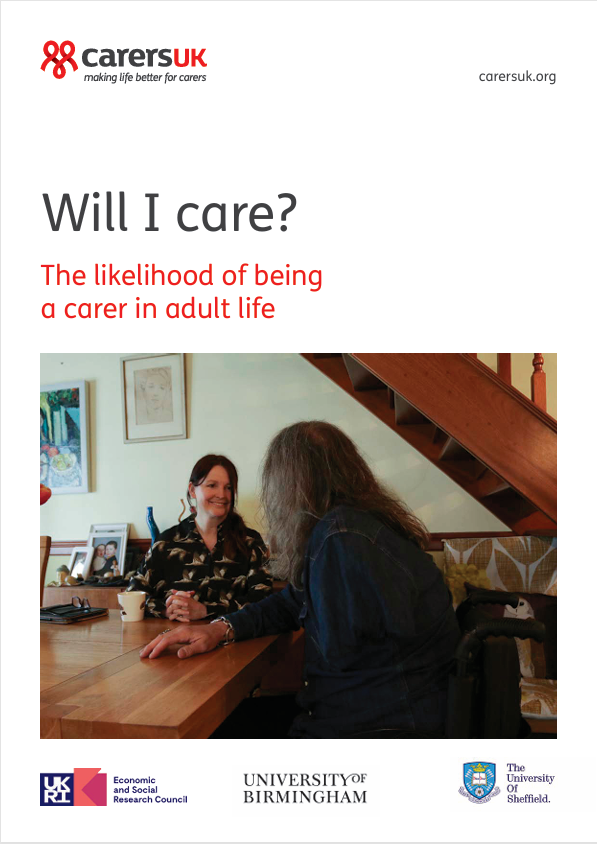
Will I Care?
About this report:
Every day, millions of people across the UK provide help and support for a family member, friend, neighbour or someone else without being paid. Their support makes a huge difference, but caring can also affect their health, finances, work and personal lives. This report explores the realities of unpaid caring, using years of research to show the challenges carers face and why they need better support.
What you’ll learn:
- Who unpaid carers are and the vital role they play.
- How caring can affect health, work, finances and everyday life.
- The challenges many carers face while supporting someone they love.
- Why good services and flexible support make such a big difference.
- The enormous value unpaid carers bring to society.
- What needs to change to better support carers across the UK.
Key Report Findings:
- In the UK, women have a 70% chance of providing care in their adult life.
- In the UK, men have a 60% chance of providing care in their adult life.
- By the time they are aged 46, half of women have been a carer. Men have the same 50:50 chance by age 57 – eleven years later.
- Caring peaks at around age 60 – more than 1 in 3 (35%) of this age group are carers.
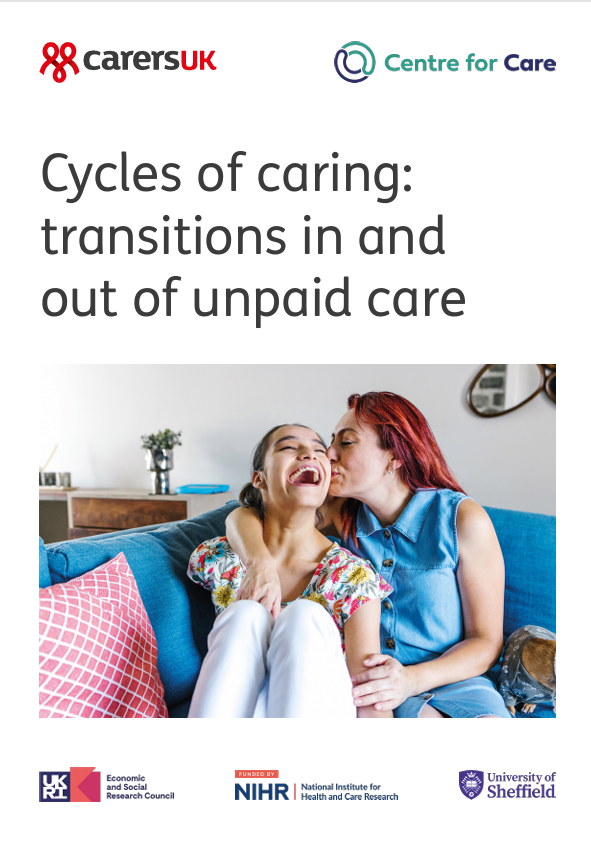
Cycles of Caring
About this report:
Anyone can become an unpaid carer, often without expecting it. This report shows how caring changes over time, with millions of people starting and stopping caring every year. It also explores the impact caring can have on people’s health, finances, work and wellbeing, and why better support is more important than ever as families face rising pressures.
What you’ll learn:
- How many people become unpaid carers each year.
- Why caring is something many of us will experience during our lives.
- How caring can affect health, work, finances and wellbeing.
- How caring changes over time and why people’s experiences are different.
- Why events like the pandemic and the cost of living crisis have made caring harder.
- What changes could help unpaid carers get the support they need.
Key Report Findings (over the period 2010-2020):
- Every year, 4.3 million people became unpaid carers – that is 12,000 people a day.
- Every year, more than 1.9 million people in paid employment became unpaid carers – that is 5,300 people every day.
- On average, 7% of women and 6.2% of men became unpaid carers – more than 2.3 million women and nearly 2 million men every year.
- People aged 46-65 were the largest age group to become unpaid carers (41%).
Valuing Carers
About this report:
Unpaid carers provide essential support to millions of people across England and Wales. This report reveals the huge value of that care, showing how unpaid carers save the health and social care system billions of pounds every year. It also explores how caring is changing, with more people providing more hours of care, and why carers need greater recognition and better support.
What you’ll learn:
- The economic value of unpaid care in England and Wales.
- How unpaid carers support the health and social care system.
- How caring has changed over the last decade.
- Why more people are providing more hours of unpaid care.
- How caring affects people, their families and local communities.
- Why better support and recognition for unpaid carers is urgently needed.
Key Report Findings:
- In 2021, it was estimated that the economic value of the contributions made by carers in England and Wales was £162 billion per year.
- 1.9% of people are providing 20–49 hours of care per week, increasing the value of care by £17 billion.
- 2.8% of people are now providing over 50 hours of care per week, increasing the value of care by over £20 billion.